

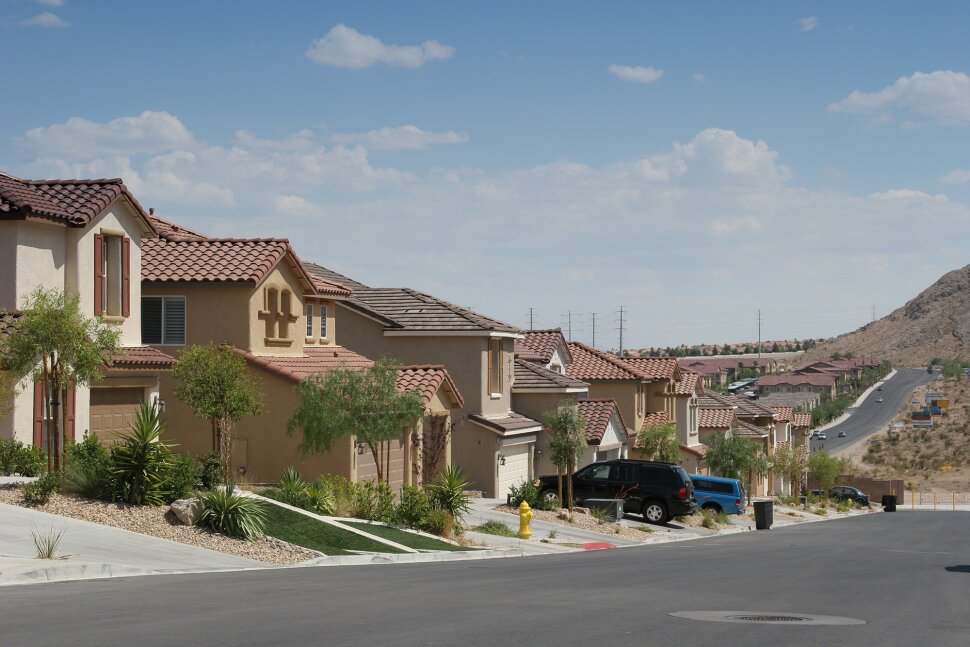
- There are three programs, not two. The Nevada Housing Division runs Worker Advantage, Home Is Possible, and Home Is Possible for First-Time Homebuyers, and their limits are very different.
- Flat dollars vs a percentage: Worker Advantage pays a flat $20,000. Home Is Possible pays up to 5% of the loan value. The first-time version pays up to 4% of the total loan amount.
- A $400,000 loan is roughly the crossover. Below it the flat $20,000 is the larger number. Above it, 5% starts paying more.
- Clark County income caps are not the same: $147,300 for Worker Advantage, a $165,000 qualifying income ceiling for Home Is Possible, and $105,500 or $121,325 by household size for the first-time program.
- You generally get one bite. Worker Advantage requires that you have not already used a Home Is Possible program.
- All three run through an approved lender and all three require a homebuyer education course before closing.
Nevada's down payment assistance all sits under one roof: the Nevada Housing Division and its Home Is Possible umbrella. Most Las Vegas buyers arrive thinking the choice is between two programs. It is actually three, and picking the wrong one can cost you real money, because one pays a flat $20,000 while the other two pay a percentage of your loan. Which is bigger depends entirely on your loan size, and which you are even allowed to use depends on your job, your household income, and whether you have owned a home before. The figures below are program details published by the Nevada Housing Division, not a quote, offer, or commitment to lend. Whichever program you land on, the seller sees the same thing, which is why it helps to know how an assistance offer reads from the seller's side of the table before you write one.
- Worker Advantage pays a flat $20,000 to essential workers in health care, education, public safety, or construction, with no first-time buyer requirement.
- Home Is Possible pays up to 5% of the loan value, has no first-time buyer requirement, and uses a $165,000 qualifying income ceiling.
- Home Is Possible for First-Time Homebuyers pays up to 4% of the total loan amount and is limited to buyers who have not owned a home in three years.
- All three set a 640 minimum credit score, or 660 for a manufactured home.
- Worker Advantage and Home Is Possible both cap the home price at $832,750. The first-time program caps Clark County at $566,354.
- You apply through a Nevada Housing Division approved lender, not directly with the state.
What down payment assistance does Nevada offer in 2026?
The Nevada Housing Division publishes three separate down payment assistance programs for 2026, all under the Home Is Possible brand: Worker Advantage, Home Is Possible, and Home Is Possible for First-Time Homebuyers. They share a 640 credit floor and a homebuyer education requirement, and they differ on almost everything else.
The naming is the first thing that trips people up. "Home Is Possible" is both the umbrella brand for all of Nevada's programs and the name of one specific program inside it, and that specific program is the one that does not require you to be a first-time buyer. The first-time buyer product is a separate listing with its own, much tighter county limits. When a Las Vegas seller's agent or a friend tells you they used "HIP," ask which one, because the income ceilings are nearly $60,000 apart in Clark County. If the reason you are asking is that you have owned a home before, the eligibility side of that question is worked through in our guide to Nevada down payment assistance for repeat buyers.
Here is how the three compare on the terms that actually decide your file.
| Term | Worker Advantage | Home Is Possible | HIP for First-Time Homebuyers |
|---|---|---|---|
| Assistance | $20,000 flat | Up to 5% of the loan value | Up to 4% of the total loan amount |
| First-time buyer required? | No | No | Yes, no ownership in 3 years |
| Who it is for | Essential workers only | Any qualifying buyer | First-time buyers |
| Income limit | Up to 150% of area median income | Qualifying income up to $165,000 | Set by county and household size |
| Home price cap | $832,750 | $832,750 | Set by county |
| Minimum credit score | 640, or 660 manufactured | 640, or 660 manufactured | 640, or 660 manufactured |
| Homebuyer education | Required before closing | Required | Required |
If you want the wider view of every route to a down payment in this market, including gifts and seller credits, our guide to down payment assistance in Las Vegas is the pillar this page sits under.
Worker Advantage vs Home Is Possible: what is the real difference?
Worker Advantage and Home Is Possible differ on two things that decide your file: who you have to be to use them, and how the money is sized. Worker Advantage is restricted to essential workers and pays a fixed $20,000 no matter what you buy. Home Is Possible is open to any qualifying buyer and pays a percentage, so the assistance grows with the loan.
Worker Advantage is also very specific about the shape of the money, and this is the part buyers most often misunderstand. The Nevada Housing Division describes it plainly:
“$20,000 in downpayment assistance in the form of a no-interest, no-payment, non-forgivable 30-year second mortgage”
Source: Nevada Housing Division, Worker Advantage program page · https://www.homeispossiblenv.org/worker-advantage
Non-forgivable is the operative word. This is not a grant that melts away after a few years of occupancy. It is a real second lien you repay when you sell, refinance, or pay off the first mortgage. It costs you nothing monthly, but it is money owed. The first-time buyer program uses the same structure, described on its own page as 30 year non-forgivable.
Home Is Possible sizes its help off the loan instead:
“Get up to 5% of the loan value to apply toward down payment or closing costs”
Source: Nevada Housing Division, Home Is Possible program page · https://www.homeispossiblenv.org/home-possible
That single design choice, flat dollars against a percentage, is what makes this a genuine decision rather than a formality. It also means the "better" program changes as your price point moves.
Buyers routinely tell us they are "getting the 5%" when they mean the first-time program, which publishes 4%. One percent of a $400,000 loan is $4,000, and that gap usually shows up at the worst possible moment, three days before closing, when the final cash to close is calculated. Read the program page for the exact product you are being placed into, not the umbrella brand name.
Which Nevada program gives you more money?
Worker Advantage pays the most of Nevada's three programs below roughly a $400,000 loan, where its flat $20,000 beats both percentages. Above that point Home Is Possible's 5% pulls ahead, and the gap widens as the loan grows.
The arithmetic is simple enough to do in your head. Five percent of a $400,000 loan is exactly $20,000, so that is where the percentage program catches the flat payment. The first-time program's 4% does not reach $20,000 until a $500,000 loan, and in Clark County its own purchase price cap of $566,354 keeps it from running far past that point. So for the typical Las Vegas purchase, the first-time program is almost always the smallest of the three in raw dollars, even though it is the one most first-time buyers are steered toward.
That does not automatically make it the wrong choice. It is the only one of the three you can use if you are not an essential worker and your household income sits under the county first-time limits but you still want assistance. The point is to know what you are trading.
Compare the three programs at your loan size
This Nevada down payment assistance comparison shows what Worker Advantage, Home Is Possible, and the first-time program would each pay at their published maximums. Enter your loan amount below. This is an educational comparison, not an application, an eligibility determination, or an offer.
What would each program pay?
Published program maximums only. Nothing is saved or submitted.
Worker Advantage pays the most at this loan size, if you qualify as an essential worker.
Illustrative only, based on published program maximums, and not a quote, offer, or commitment to lend. Actual assistance depends on the program's rules, your county limits, your loan, and underwriting approval. Eligibility for any program is determined by the Nevada Housing Division and its approved lenders.
The programs differ on income, job category, prior ownership, and price cap, and only one of them can usually be used. We will help you read your own numbers against all three, then show you the FHA financing side of the same purchase. Soft credit check to start, no impact to your score. All loans are subject to credit, income, property, and underwriting approval; program figures are Nevada Housing Division details, not a quote, offer, or commitment to lend.
Check my optionsWho qualifies for each program in Clark County?
Nevada's three assistance programs draw the Clark County income line in three very different places, and income is almost always the binding number. Worker Advantage allows household income up to $147,300. Home Is Possible uses a $165,000 qualifying income ceiling statewide. The first-time program is the tightest, at $105,500 for households of two or fewer and $121,325 for three or more.
| Program | Clark County income limit | Clark County price cap |
|---|---|---|
| Worker Advantage | $147,300 household | $832,750 |
| Home Is Possible | $165,000 qualifying income | $832,750 |
| HIP for First-Time Homebuyers | $105,500 for 2 or fewer people, $121,325 for 3 or more | $566,354 |
Two cautions on that table. First, the Nevada Housing Division footnotes the first-time limits with a note that certain areas within a county may have a higher income limit, so a specific address can behave differently from the county headline. Second, household income and qualifying income are not interchangeable terms, and the programs use them differently, which is exactly the kind of detail an approved lender resolves against your actual file rather than a web page.
Worker Advantage adds requirements the other two do not have: at least one borrower must work in health care, education, public safety, or construction, and you must have been a Nevada resident for at least six months. If only one borrower on a joint application meets the job test, that is enough. The dedicated Nevada Worker Advantage guide covers the program mechanics, and the full list of 47 qualifying job titles is published separately, county income limits included.
Notice that both Worker Advantage and Home Is Possible cap the home price at $832,750, which is the same figure the Federal Housing Finance Agency set as the 2026 baseline conforming loan limit for one-unit properties. They are not the same quantity, though. One is a cap on what you may pay for the house, the other is a cap on what Fannie Mae and Freddie Mac will buy. If you are financing with FHA, the FHA county limit for Clark County is well below both, so for most FHA buyers here the FHA limit binds first and the program price cap never comes into play. Our Clark County FHA loan limits guide carries the current figure.
Can you use more than one Nevada down payment program?
Nevada down payment assistance is effectively a one-time benefit: the Nevada Housing Division's Worker Advantage eligibility list states that you must not be a previous Home Is Possible program user, which closes the door on collecting assistance twice across the state's programs.
This matters more than it sounds, because it makes the order of operations a one-way street. If you take the first-time program's 4% on a starter condo at 27 years old, you have spent your Home Is Possible eligibility, and the $20,000 Worker Advantage is no longer available to you later when you are a nurse buying a family home. There is no undo. For buyers who are clearly on an essential-worker track, that is a real argument for waiting rather than taking the first assistance offered.
What you can stack is assistance with other legitimate sources of cash to close. A gift from a family member follows its own rules and is not a state program, so it does not consume your Home Is Possible eligibility. Our guide to using gift funds for an FHA down payment covers the donor and documentation requirements, and the parent site explains what a properly documented down payment gift has to show before an underwriter will count it.
Worth planning for either way: all three programs apply their help to the down payment and closing costs, and one of the larger prepaid items sitting in that closing-cost column is the first year of homeowners coverage. Our sister agency Valley West Insurance shops that coverage for Las Vegas buyers, which is worth lining up early because the premium is quoted well before you sit down to sign.
Do these programs work with an FHA loan in Las Vegas?
Worker Advantage, Home Is Possible, and the first-time program all work with an FHA loan, because all three are designed to sit behind a 30-year first mortgage. The Worker Advantage guidelines specifically reference Ginnie Mae (FHA, VA, USDA-RD), Fannie Mae and Freddie Mac underwriting, and Home Is Possible publishes separate maximum debt ratios for government loans and conventional loans.
The pairing is natural for the same reason FHA itself is popular in this market: it is built for buyers with steady income and limited savings. Assistance covers the cash, FHA relaxes the down payment and credit profile, and the two together are what actually gets a working household to a closing table. See our FHA down payment guide for 2026 for how little you can put down before assistance is applied.
One number to watch. All three Nevada programs require a 640 credit score, or 660 for a manufactured home. That floor is higher than FHA's own minimum, so it is entirely possible to be approved for an FHA loan and still be turned away from the assistance on score alone. If you are sitting in the low 600s, our FHA credit score requirements guide is the more useful starting point, because repairing the score is what unlocks the program, not the other way round. Veterans weighing the VA route instead can compare it on our VA down payment assistance guide for Las Vegas.
How do you actually apply for Nevada down payment assistance?
Nevada down payment assistance is applied for through a Nevada Housing Division approved lender, not with the state directly. The Nevada Housing Division maintains its own directory and says there are more than 80 mortgage companies across Nevada set up to originate these programs.
The sequence is the same for all three programs: get pre-qualified with an approved lender, complete the required homebuyer education course before closing, and let that lender reserve the assistance on your behalf while your purchase moves forward. Because the program is delivered by the lender, switching lenders in the middle to reach a program you did not qualify for at the start can cost weeks.
That is the practical reason to settle the program question before you pick anyone. Use the Nevada Housing Division's own Find a Lender directory to confirm which companies are currently approved, and confirm the program terms with the Nevada Housing Division at 800-227-4960 before you rely on any figure, including the ones on this page.
To be straightforward with you: Valley West Mortgage is not listed in the Nevada Housing Division's approved lender directory, so we do not originate these state programs. What we do is the FHA financing side of the same purchase, and we will happily read your numbers against all three programs first so you walk into an approved lender knowing which one you actually fit. If assistance turns out to be the better path for you, we will tell you that too. We would rather be useful than be the only option you looked at.
Which Nevada program should you choose?
Choosing between Nevada's three assistance programs starts with eligibility, not with the size of the check, because eligibility eliminates most of the choice for you. Work down this order:
- Are you an essential worker in health care, education, public safety, or construction, and a Nevada resident of six months? If yes, Worker Advantage is usually the strongest option, and it is the only one that does not care whether you have owned before.
- Is your household income above the county first-time limits but under $165,000? Then Home Is Possible is likely your program, and its percentage payment is worth more than the first-time program's on the same loan.
- Are you a genuine first-time buyer under the county income limits? The first-time program is designed for you, but check the Clark County price cap of $566,354 before you shop, because it is meaningfully tighter than the $832,750 the other two allow.
- Is your credit under 640? None of the three are available yet. Fix the score first.
If you are early in the process and none of this is settled, our first-time home buyer guide for Las Vegas walks the whole path, and the Las Vegas first-time buyer FHA checklist is the document-by-document version.
The bottom line
Nevada gives you three down payment assistance programs and, in practice, one chance to use them. Worker Advantage pays the most for most Las Vegas price points, at a flat $20,000, but only if someone on your loan works in one of four essential-worker fields. Home Is Possible is the open-to-anyone option and overtakes the flat $20,000 once your loan passes about $400,000. Home Is Possible for First-Time Homebuyers pays the least in raw dollars and has the tightest Clark County limits, but it is the right answer for buyers the other two do not reach.
All three are second liens you eventually repay, not gifts. All three require a 640 score and a homebuyer education course. And all three are originated by a Nevada Housing Division approved lender, so the program decision is worth settling before you choose who to work with. Confirm every figure here against the Nevada Housing Division before you rely on it, because program terms change.
Frequently asked questions
What is the difference between Nevada Worker Advantage and Home Is Possible?
Worker Advantage pays a flat $20,000 and is limited to essential workers in health care, education, public safety, or construction, with no first-time buyer requirement. Home Is Possible pays up to 5% of the loan value, is open to any qualifying buyer, and uses a qualifying income ceiling of $165,000. Both are run by the Nevada Housing Division, both cap the home price at $832,750, and both require a 640 minimum credit score. The practical difference is that one is a fixed dollar amount and the other scales with your loan. All figures are program details, not a quote, offer, or commitment to lend.
How many down payment assistance programs does Nevada have in 2026?
The Nevada Housing Division publishes three: Worker Advantage, Home Is Possible, and Home Is Possible for First-Time Homebuyers. All three sit under the Home Is Possible brand, which is why buyers often think there are only one or two. They differ on assistance amount, income limits, price caps, and whether prior homeownership disqualifies you. Confirm the current program list with the Nevada Housing Division at homeispossiblenv.org.
Which Nevada down payment assistance program gives the most money?
It depends on your loan size. Worker Advantage pays a flat $20,000, so it is the largest of the three below roughly a $400,000 loan. Home Is Possible pays up to 5% of the loan value, which reaches $20,000 at a $400,000 loan and pays more above that. Home Is Possible for First-Time Homebuyers pays up to 4% of the total loan amount, which does not reach $20,000 until a $500,000 loan. These are illustrative comparisons of published program maximums and not a quote, offer, or commitment to lend.
Can you use Worker Advantage and Home Is Possible together?
No. The Nevada Housing Division's Worker Advantage eligibility requirements state that you must not be a previous Home Is Possible program user. That means using one of Nevada's assistance programs generally spends your eligibility for the others, so the order matters. You can still combine assistance with other legitimate sources of cash to close, such as a properly documented gift, which is not a state program. Confirm current rules with the Nevada Housing Division.
What credit score do you need for Nevada down payment assistance?
All three Nevada Housing Division programs publish a minimum credit score of 640, or 660 if you are buying a manufactured home. That floor is higher than FHA's own credit minimum, so you can qualify for an FHA loan and still be turned down for the assistance on score alone. Buyers in the low 600s are usually better off repairing the score before applying. Confirm the current requirement with the Nevada Housing Division.
What are the Clark County income limits for Nevada down payment assistance?
They differ by program. Worker Advantage allows household income up to 150% of area median income, which the Nevada Housing Division lists as $147,300 for Clark County. Home Is Possible uses a statewide qualifying income ceiling of $165,000. Home Is Possible for First-Time Homebuyers is tightest, at $105,500 for households of two or fewer people and $121,325 for three or more, active as of June 15, 2026. The Nevada Housing Division notes that certain areas within a county may have a higher limit.
Do Nevada down payment assistance programs work with an FHA loan?
Yes. All three programs are designed to sit behind a 30-year first mortgage, and the Worker Advantage guidelines specifically reference Ginnie Mae (FHA, VA, USDA-RD), Fannie Mae and Freddie Mac underwriting. Home Is Possible publishes separate maximum debt ratios for government loans and for conventional loans. You still have to qualify for the FHA loan itself; the assistance changes your cash to close, not the underwriting standard.
Is Nevada down payment assistance a grant or a loan?
It is a loan. The Nevada Housing Division describes Worker Advantage as a no-interest, no-payment, non-forgivable 30-year second mortgage, and the first-time buyer program is likewise listed as 30 year non-forgivable. You make no monthly payment on the assistance, but the balance is repaid when you sell, refinance, or pay off your first mortgage. Treat it as money owed rather than money given. The exit terms differ enough between the programs to be worth their own page, so we set out how each program is repaid on the way out, including the one that carries federal recapture tax.
How do you apply for Nevada down payment assistance in Las Vegas?
You apply through a Nevada Housing Division approved lender rather than with the state directly. The Nevada Housing Division says more than 80 mortgage companies across Nevada are set up to originate these programs, and it publishes a Find a Lender directory. Get pre-qualified with an approved lender, complete the required homebuyer education course before closing, and let that lender reserve the assistance while your purchase proceeds. You can also reach the Nevada Housing Division at 800-227-4960.
Is Valley West Mortgage a Nevada Housing Division approved lender?
No. Valley West Mortgage is not listed in the Nevada Housing Division's approved lender directory, so we do not originate Nevada Worker Advantage or Home Is Possible assistance. We are a local mortgage lender, NMLS #65506, and we handle the FHA financing side of a Las Vegas purchase. We are happy to help you compare all three state programs against your own numbers before you approach an approved lender. Not affiliated with or endorsed by the Nevada Housing Division.
Sources
- Nevada Housing Division / Home Is Possible · Worker Advantage program benefits, eligibility, qualifying professions, and county income limits: homeispossiblenv.org/worker-advantage (retrieved August 25, 2026)
- Nevada Housing Division / Home Is Possible · Home Is Possible program benefits, income ceiling, price cap, credit and debt ratio requirements: homeispossiblenv.org/home-possible (retrieved August 25, 2026)
- Nevada Housing Division / Home Is Possible · Home Is Possible for First-Time Homebuyers program benefits and requirements: homeispossiblenv.org/home-possible-program (retrieved August 25, 2026)
- Nevada Housing Division · First-Time Homebuyer income and purchase price limits by county, active as of June 15, 2026: homeispossiblenv.org/page/first-time-homebuyer-income-purchase-price-limits
- Nevada Housing Division · Find a Lender directory, participating mortgage companies: homeispossiblenv.org/find-lender-agent/find-lender.php (retrieved August 25, 2026)
- Federal Housing Finance Agency · "FHFA Announces Conforming Loan Limit Values for 2026," baseline one-unit limit of $832,750, announced November 25, 2025: fhfa.gov
Keep reading on down payments and FHA. These are the questions that decide whether assistance is even the lever you need:
- Down payment assistance in Las Vegas: the 2026 pillar guide
- Nevada Worker Advantage in full, including every qualifying profession
- FHA down payment 2026: how little you can actually put down
- Using gift funds for an FHA down payment
- FHA credit score requirements in Las Vegas
- Clark County FHA loan limits for 2026
- The Las Vegas first-time home buyer guide
- FHA home loans in Las Vegas: the complete local guide